By way of a preparatory, two things are required in the pursuit of truth:
The first is a careful examination of the motivations and desires behind this pursuit. These can be divided into two kinds: those that lead us to the truth, and those that lead us into falsity. I call the former well-ordered and the latter disordered desires. Examples of the former include curiosity, wonder, and love. Examples of the latter include greed, pride, and selfishness.
Disordered desires often operate at the level of the subconsciousness. To uncover them may provoke discomfort, even psychological resistance. Yet it is necessary to do so. One must bring both well-ordered and disordered desires to light, and ask: Which of these truly governs me? If the desire to know and to affirm the truth is not the strongest, inquiry should pause. The soul must first be brought into right order. This means bringing one’s inner life into alignment, so that the desire for truth comes first. Such a realignment serves also as a kind of purification, a stripping away of wayward desires and a redirection of the will to its proper end.
This is simple in principle, but difficult in practice. Saying “yes” to truth is not hard. Living that “yes” is. Old motives resist this tendency. Illusions persist. Yet truth is not far from sight. It is already seen—quietly, inwardly. The task is not to find something that is missing, but to remove the clouds that conceal its light.
Thus the second requirement is the formation of new habits. Self-examination may reveal what motivates us, but that does not guarantee change. Few people are converted in a flash, like Saul on the road to Damascus. Rather, old patterns often return. They must be slowly replaced with new ones. In time, the soul will develop a habitus for truth—a stable readiness to recognize and affirm truth whenever it is seen.
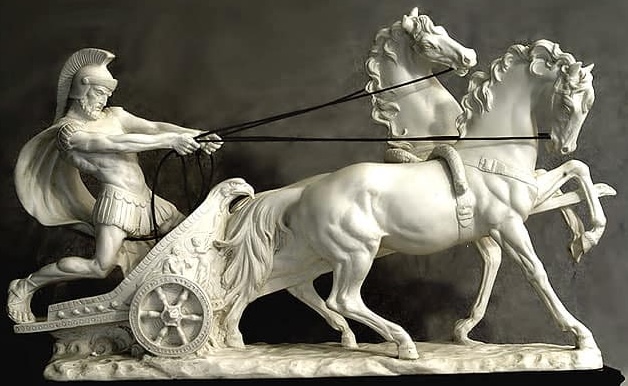
Plato captures this struggle in his image of the charioteer. The soul is like a charioteer guiding two horses—one obedient, one unruly. The obedient horse aligns with reason; the unruly one seeks its own end. When the lower part of the soul governs, it tyrannizes the person like a master over a slave. The work, then, is to regain command, to order and not be ordered by one’s desires.
Pascal puts it this way: “The heart has reasons of which reason is unaware.” The heart can both guide and mislead us in the search for truth. And in almost every person, both are at play. We are rational beings, but are also in a body . We are drawn to truth, and at the same time, drawn toward other desires.
Accordingly, let us set our desires aright. Let us seek truth, and subordinate all other desires to this highest aim and end. Once this has been done—once the soul is able to maintain its gaze, its deepest longing, upon the truth—then will we be ready to undertake the task of actually doing philosophy.

 Remarks
Leave a comment